Walking for Constipation: What Women Should Know
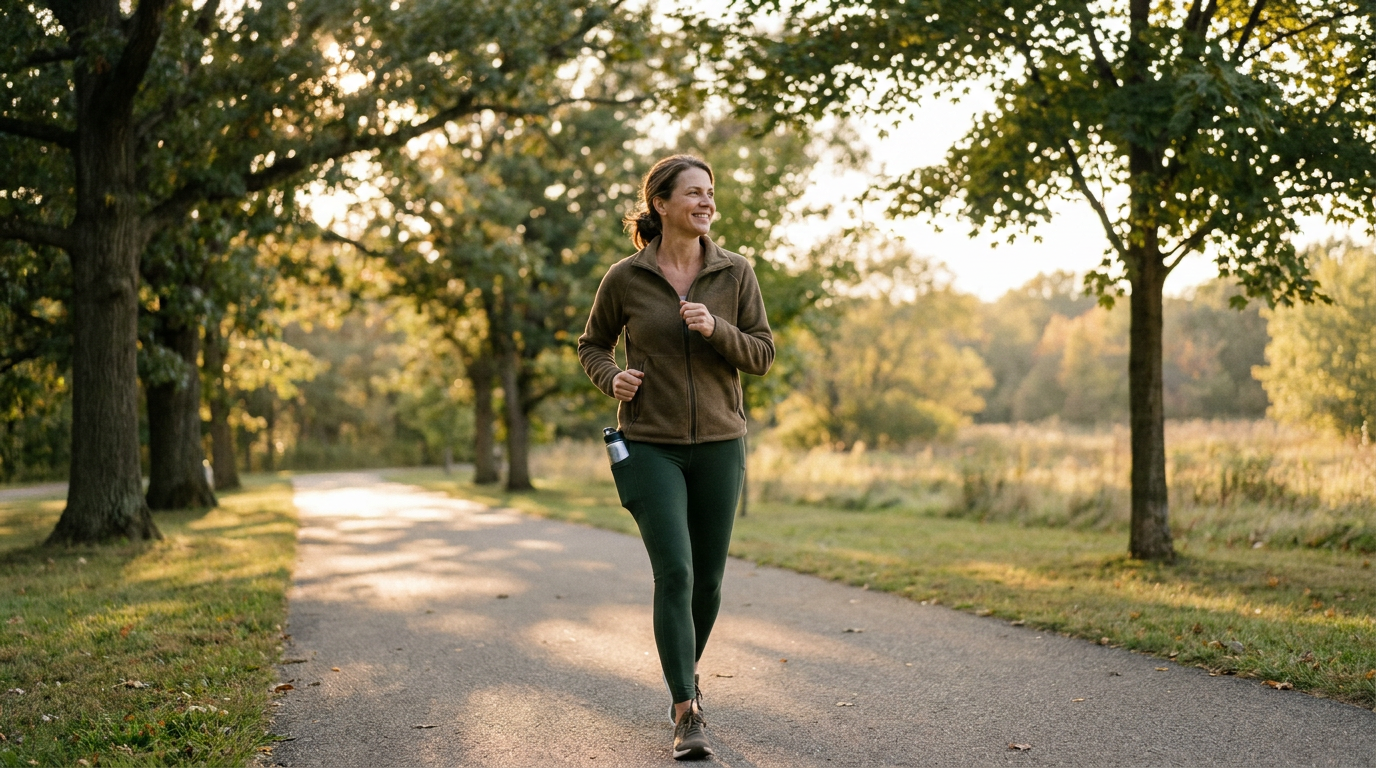
Walking for constipation has a plausible new piece of evidence behind it. In a small human study, 21 healthy adults completed 20 minutes of comfortable treadmill walking. Indirect signs of intestinal activity rose shortly afterward, suggesting that even gentle movement can produce an immediate, if brief, change in the gut.
The result does not establish walking as a treatment for chronic constipation, and it was not a women-specific trial. Still, it adds physiological detail to a broader picture: movement, hydration, food intake, hormonal shifts and pelvic-floor function can all influence bowel regularity. For women, the useful question is not simply whether walking works, but when it appears to work and what else is changing at the same time.
What the walking for constipation study found
The 2025 study, published in Scientific Reports, measured bowel sounds before and after participants walked on a treadmill for 20 minutes. Researchers used the amplitude, duration and number of sounds as indirect markers of gut motility. All three measures increased significantly one to two minutes after the walk, then the effect faded within minutes.
This was a small, acute human experiment rather than a long-term randomised treatment trial. Participants were healthy adults, not people diagnosed with constipation, and bowel sounds are not the same as stool frequency, transit time or symptom relief. The study therefore shows a short-lived physiological response, not proof that a daily walk resolves constipation.
The authors proposed possible contributions from autonomic nervous system changes, local reflexes and the mechanical oscillation produced by walking. That makes biological sense, but the experiment did not establish which mechanism was responsible. It also did not report women-specific outcomes in the supplied material, so it cannot show whether menstrual stage, hormonal contraception or menopause altered the response.
Why bowel patterns can change across the menstrual cycle
Constipation in women is rarely explained by activity alone. Ovarian hormone fluctuations can coincide with changes in stool frequency, consistency, bloating and abdominal discomfort. Some women notice slower bowel movements in the luteal phase, while prostaglandin activity around menstruation may be associated with looser or more frequent stools. These experiences vary considerably, and symptoms can also reflect food intake, stress, sleep, medications or an underlying gastrointestinal condition.
A single day of walking followed by a bowel movement cannot separate these influences. Comparing the same type and duration of movement across several cycles is more informative. Cycle day, stool form, straining, bloating and whether a bowel movement occurred can help distinguish a repeatable pattern from coincidence.
Endometriosis adds another layer. Pelvic pain, painful bowel movements and abdominal symptoms may continue even after hormonal or surgical treatment. The supplied evidence includes a 2011 multicentre study in Fertility and Sterility on quality of life and work productivity, but it does not test walking as a treatment for persistent pain. Movement may be comfortable and useful for some people, yet exercise should not be presented as a substitute for evaluating ongoing pelvic or bowel symptoms.
Menopause can change both movement and digestion
During perimenopause and after menopause, bowel habits may shift alongside sleep disruption, hot flushes, changes in food choices, stress and reduced activity. Evidence isolating hormones as the cause of constipation remains limited, so symptoms should not automatically be attributed to menopause. Tracking can help show whether constipation clusters with cycle changes, night sweats or poor sleep; how perimenopause tracking works offers a framework for separating overlapping signals.
A 2026 American College of Physicians clinical guideline in Annals of Internal Medicine recommends menopausal hormone therapy as first-line pharmacological treatment for vasomotor symptoms, using estrogen with a progestogen for those with a uterus and estrogen alone for those without one. This is a clinical guideline, not a trial of digestion or exercise. Its relevance to constipation is indirect: when night sweats disturb sleep or reduce daytime energy, regular movement and consistent meals may become harder to maintain.
Hormone therapy should not be assumed to correct bowel symptoms. If digestion changes after starting, stopping or adjusting a treatment, the timing matters, but temporal association alone does not prove cause. Recording medication changes alongside sleep, energy and bowel patterns can make a clinical conversation more specific.
Nutrition and recovery determine the wider effect
Walking is only one part of constipation management. Adequate fluid, sufficient dietary fibre and regular food intake are often important, but simply adding large amounts of fibre can worsen bloating or discomfort in some people. The type of fibre, speed of increase and total fluid intake all affect tolerance. Protein-focused eating patterns may also displace fibre-rich foods if vegetables, fruit, legumes and whole grains are not retained.
Training load deserves attention as well. Moderate movement may support regularity, whereas abrupt increases in exercise, under-fuelling or dehydration can produce a different outcome. Menstrual bleeding, hot weather, sweating and gastrointestinal sensitivity can further change hydration needs. More exercise is therefore not automatically better for digestion.
For a practical test, the useful comparison is consistent rather than intense: similar walking duration, similar timing relative to meals, and a record of stool form, ease of passage, bloating and urgency. Energy tracking over time can add context when fatigue or disrupted sleep changes how much movement is realistic.
When a pattern is more useful than a single walk
The new study supports a narrow conclusion: 20 minutes of walking briefly increased indirect markers of gut movement in 21 healthy adults. It does not tell us how often to walk, whether walking outdoors has the same effect, or which women with constipation are most likely to benefit. Larger trials in women with diagnosed constipation are needed, with outcomes such as complete bowel movements, stool consistency, pain and quality of life.
Persistent constipation, a marked change in bowel habits, rectal bleeding, unexplained weight loss, vomiting, severe pain or symptoms that repeatedly interfere with daily life warrant medical assessment rather than exercise experimentation alone. Pelvic-floor dysfunction, endometriosis, thyroid disorders, medication effects and gastrointestinal disease can overlap with what seems like ordinary constipation.
Whether walking is followed by easier bowel movements only becomes readable when digestion, cycle symptoms and activity are logged consistently over weeks. This is the kind of pattern Tulsy is built to surface.
Sources: ScienceDaily, Medical Xpress.
This content is for informational and educational purposes only. It is not intended to diagnose, treat, cure, or prevent any disease, and should not replace advice from a qualified healthcare professional.
Common questions
- How soon after walking can the gut become more active?
- In a small study of 21 healthy adults, indirect markers of gut motility increased one to two minutes after a 20-minute treadmill walk. The rise faded within minutes. Because researchers measured bowel sounds rather than bowel movements or symptom relief, the result does not prove that walking will immediately relieve constipation.
- Can menstrual hormones cause constipation?
- Bowel habits can change across the menstrual cycle, and some women report slower stools or more bloating during the luteal phase. Around menstruation, others experience looser or more frequent stools. Hormones may contribute, but diet, hydration, sleep, stress, medication and pelvic conditions can produce similar changes.
- How long should I walk to help bowel movements?
- The recent study tested 20 minutes of comfortable treadmill walking, but it did not establish an ideal dose or treat people with diagnosed constipation. A consistent, tolerable walk may be reasonable to evaluate alongside hydration, fibre intake and symptoms. Persistent constipation or warning signs such as bleeding, weight loss or severe pain require medical assessment.
More on the research behind Tulsy in the science, or browse everything in Fitness and Nutrition.
References
- Katagiri K et al. Immediate effect of physical activity on gut motility in healthy adults. Scientific Reports. 2025. doi:10.1038/s41598-025-18860-8
- Qaseem A et al. Pharmacologic Treatments for Females With Menopausal Vasomotor Symptoms: A Clinical Guideline From the American College of Physicians. Annals of Internal Medicine. 2026. doi:10.7326/annals-26-01205
- Nnoaham KE et al. Impact of endometriosis on quality of life and work productivity: a multicenter study across ten countries. Fertility and Sterility. 2011. doi:10.1016/j.fertnstert.2011.05.090 · PubMed
Further reading (news coverage)
Related reading
- Strength Training and Vitamin D for Women: Beyond the Scale
New research sharpens the case for looking beyond body weight when assessing resistance exercise, while raising practical questions about vitamin D2 and D3.
- Strength Training for Longevity: What Women Need to Know
Physical capacity may begin declining in the mid-30s, but later-life improvement remains possible. For women, effective strength work also requires measured recovery.
- Gut Health and Younger-Onset Cancer: What Women Should Know
Cancer rates are rising among younger adults for reasons established risk factors cannot fully explain. The gut microbiome is one hypothesis, not yet a proven cause.
Get Tulsy Daily in your inbox