Strength Training for Longevity: What Women Need to Know
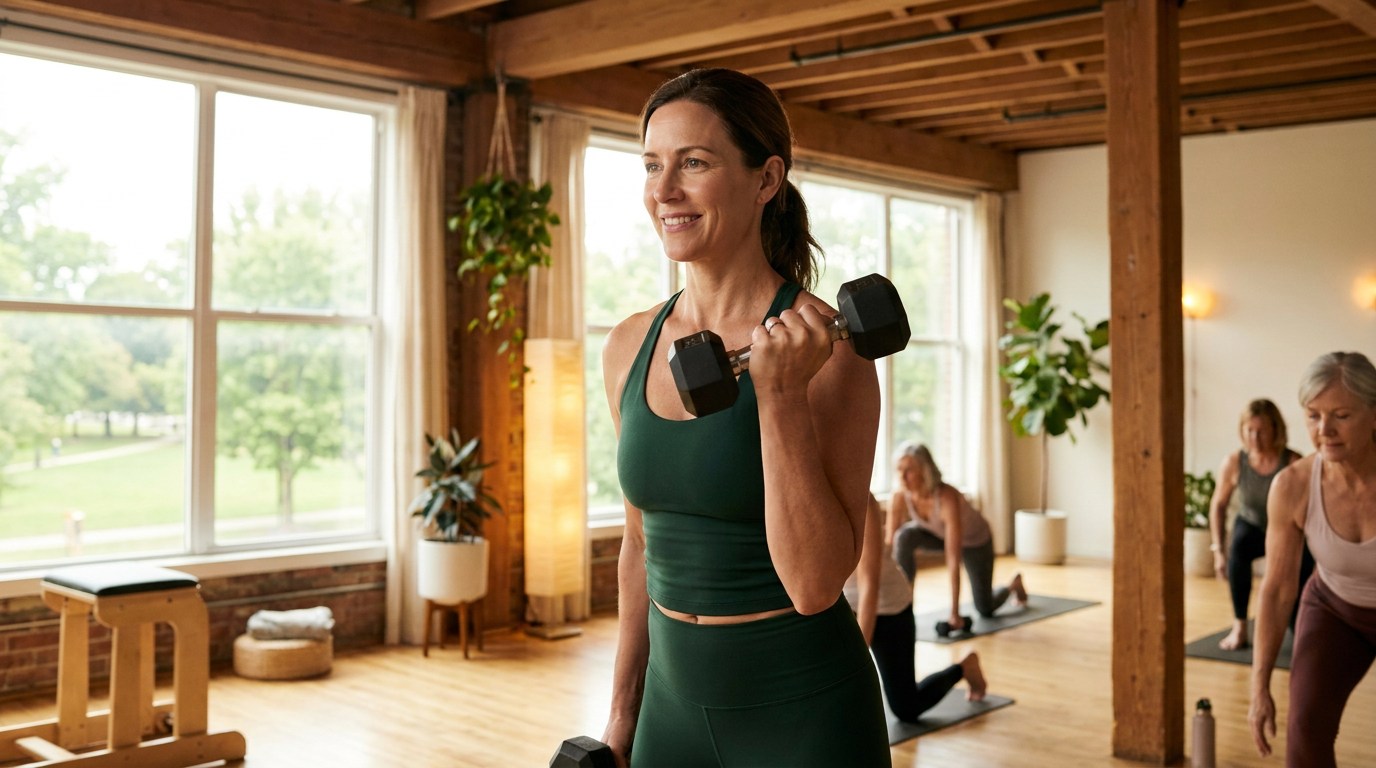
Strength training for longevity is often framed as a response to old age. Long-term evidence suggests the useful window opens much earlier. A Swedish cohort followed from adolescence into the early 60s found that aerobic capacity and muscular endurance generally peaked between ages 26 and 36, then declined gradually before the rate of loss accelerated.
That does not mean the body suddenly weakens at 35, or that decline is fixed. It means the biological processes affecting physical capacity can begin decades before they threaten independence. The practical goal is not to defeat ageing, but to build and preserve enough strength, endurance and recovery capacity to support health across later life.
Two other lines of research sharpen that point. A human training study found that routine cold-water immersion after lifting reduced muscle adaptation in men, while new mouse research identified an immune-evasion mechanism that may allow senescent cells to accumulate with age. Together, the findings distinguish interventions that are useful now from anti-ageing ideas that remain experimental.
Strength training for longevity starts before old age
The 2025 Journal of Cachexia, Sarcopenia and Muscle study was a population-based longitudinal analysis, not a randomised trial. Westerståhl M and colleagues repeatedly assessed 427 people born in 1958, 48% of whom were women, from age 16 to 63. Estimated maximal aerobic capacity and bench-press endurance peaked during early to mid-adulthood in both sexes. Initial annual declines were modest, at about 0.3% to 0.6%, then accelerated later to around 2.0% to 2.5%.
Its unusual strength is the 47-year follow-up with objective testing. Its limitations are equally important. This was one Swedish birth cohort, the muscle-endurance measure centred on bench pressing, and observational modelling cannot show that a particular programme prevents age-related loss. The combined headline figure also does not describe every woman’s trajectory.
Even so, the study supports a useful distinction between chronological age and functional reserve. Small losses in muscle performance may be invisible when reserve is high. Over decades, the same losses can affect balance, mobility, metabolic health and the ability to recover from illness. Crucially, the researchers also found that people who began exercising in adulthood could improve their physical performance. Earlier training creates more reserve, but later training still matters.
Women’s hormonal transitions can change the trajectory
The Swedish findings included women, but the supplied evidence does not report results by menstrual status, menopause stage or hormone therapy use. That leaves an important gap. Midlife changes in oestrogen, sleep, vasomotor symptoms and body composition may overlap with the age-related decline identified in the cohort, but this study cannot separate those effects.
For women, a stable training plan can feel different across the late reproductive years, perimenopause and postmenopause. Changes in sleep quality, joint symptoms, bleeding, temperature regulation or perceived exertion can alter recovery and consistency even when the programme itself has not changed. These observations do not prove that hormones explain a performance dip, but they make context essential when interpreting one.
The menopause market can complicate that interpretation. A 2025 qualitative study in Health Promotion International surveyed 509 Australian women aged 45 to 64. Participants described concern that commercial messaging could amplify fears about menopause and ageing to generate demand. Because this was an online qualitative survey, it reveals perceptions rather than testing whether a product works.
That distinction matters for longevity claims. A supplement or programme labelled for menopause is not automatically supported by evidence for strength, function or healthy lifespan. How perimenopause tracking works can help place changes in training capacity beside sleep, cycle symptoms and energy without assuming that one variable is the sole cause.
Recovery methods should support adaptation, not erase it
Recovery is part of training, but immediate relief and long-term adaptation are not the same outcome. A 2015 study in The Journal of Physiology compared cold-water immersion with active recovery after strength exercise. In one arm, 21 physically active men trained twice weekly for 12 weeks. Regular 10-minute cold-water immersion reduced gains in muscle mass and strength and blunted acute anabolic signalling and satellite-cell activity.
This was experimental human research, but the sample was small and male. It cannot establish that women respond identically, nor that occasional cooling is harmful in every setting. Cold exposure may still have a place when rapid short-term recovery is more important than maximising muscle growth. The concern is routine use immediately after resistance sessions designed to stimulate strength or hypertrophy.
The broader lesson is to assess recovery by what happens over time. Reduced soreness the next morning does not necessarily mean better adaptation. Sleep quality, adequate nutrition and enough time between demanding sessions may be less marketable, but they align more directly with rebuilding. Trends in load, repetitions, perceived effort and next-day energy can show whether recovery is supporting progress or merely changing how soreness feels.
Senescent-cell research is promising but not ready for practice
A 2026 Cell Metabolism study by Chaib S and colleagues investigated PD-L2, a protein that may help senescent cells avoid immune clearance. These damaged cells no longer divide normally and can release inflammatory signals. In mice, blocking PD-L2 reduced senescent-cell accumulation and inflammation while improving glucose regulation and strength.
This is mechanistic animal research, not evidence for an available longevity treatment in women. Mouse improvements do not establish safety, dosing or durable benefit in humans. The immune system also uses checkpoint pathways for normal regulation, so blocking one pathway could have consequences that preclinical summaries do not resolve.
The study is valuable because it may explain part of the biology behind age-related dysfunction. It does not displace proven foundations such as progressive resistance exercise and aerobic activity. Nor does it validate commercial products claiming to clear senescent cells. Until human trials establish meaningful outcomes and risks, the research should be viewed as a possible future therapeutic direction.
Capacity becomes clearer when performance and recovery are tracked together
No single metric captures functional ageing. Strength can rise while sleep deteriorates; aerobic fitness can improve while cycle symptoms disrupt consistency. A useful record therefore connects training performance with recovery signals rather than treating workouts as isolated events. Energy tracking over time can help distinguish a brief fluctuation from a sustained change that deserves closer attention.
Training recovery and energy only become readable when they are logged consistently over weeks. This is the kind of pattern Tulsy is built to surface.
Sources: ScienceDaily, Medical Xpress.
This content is for informational and educational purposes only. It is not intended to diagnose, treat, cure, or prevent any disease, and should not replace advice from a qualified healthcare professional.
Common questions
- At what age do women start losing strength?
- A 47-year Swedish cohort found that muscular endurance and aerobic capacity generally peaked between ages 26 and 36 in both sexes, followed by gradual decline that accelerated later. This is a population pattern, not a deadline for an individual woman. Training history, health, menopause-related factors, sleep and nutrition can all influence the trajectory.
- Can I still build strength if I start exercising after 40?
- Yes. The long-term Swedish study found that starting exercise in adulthood could still improve physical performance. Progressive resistance training can build strength beyond 40, although the rate of adaptation varies. A suitable starting load, gradual progression, adequate protein and sufficient recovery are more relevant than trying to compensate with an excessively aggressive programme.
- Do ice baths reduce muscle growth after strength training?
- One small human study found that regular 10-minute cold-water immersion after resistance training reduced gains in muscle mass and strength compared with active recovery. All 21 participants in that study were physically active men, so direct evidence in women is limited. Occasional cooling and routine post-lifting immersion should not be assumed to have identical effects.
More on the research behind Tulsy in the science, or browse everything in Longevity.
References
- Westerståhl M et al. Rise and Fall of Physical Capacity in a General Population: A 47‐Year Longitudinal Study. Journal of Cachexia, Sarcopenia and Muscle. 2025. doi:10.1002/jcsm.70134
- Chaib S et al. Blocking PD-L2 prevents senescent cell accumulation and age-related dysfunction. Cell Metabolism. 2026. doi:10.1016/j.cmet.2026.08.014
- Roberts LA et al. Post‐exercise cold water immersion attenuates acute anabolic signalling and long‐term adaptations in muscle to strength training. The Journal of Physiology. 2015. doi:10.1113/jp270570 · PubMed
- Wood K et al. “It’s all about the money.” Australian women’s perspectives about menopause and the commercial determinants of health. Health Promotion International. 2025. doi:10.1093/heapro/daaf168
Further reading (news coverage)
- A 47-year study reveals the age when your body starts losing strengthScienceDaily
- Scientists discover how harmful “zombie cells” hide from the immune systemScienceDaily
- Scientists reveal why some workout recovery tricks can backfireScienceDaily
- Menopause is a biological transition that's become a lucrative consumer businessMedical Xpress
Related reading
- Women’s Longevity After Menopause: What to Track Earlier
Menopause may involve concentrated physiological change rather than a slow, uniform transition. Sleep and activity patterns can add useful context, but long-term trends matter more than single readings.
- Gut Health and Younger-Onset Cancer: What Women Should Know
Cancer rates are rising among younger adults for reasons established risk factors cannot fully explain. The gut microbiome is one hypothesis, not yet a proven cause.
- Gut Metabolites and Brain Health: What Women Should Know
A bacterial metabolite has been associated with early Alzheimer’s markers. The finding sharpens interest in the gut-brain axis, but it is not yet a clinical test or treatment target.
Get Tulsy Daily in your inbox