Strength Training During Pregnancy and Gestational Diabetes
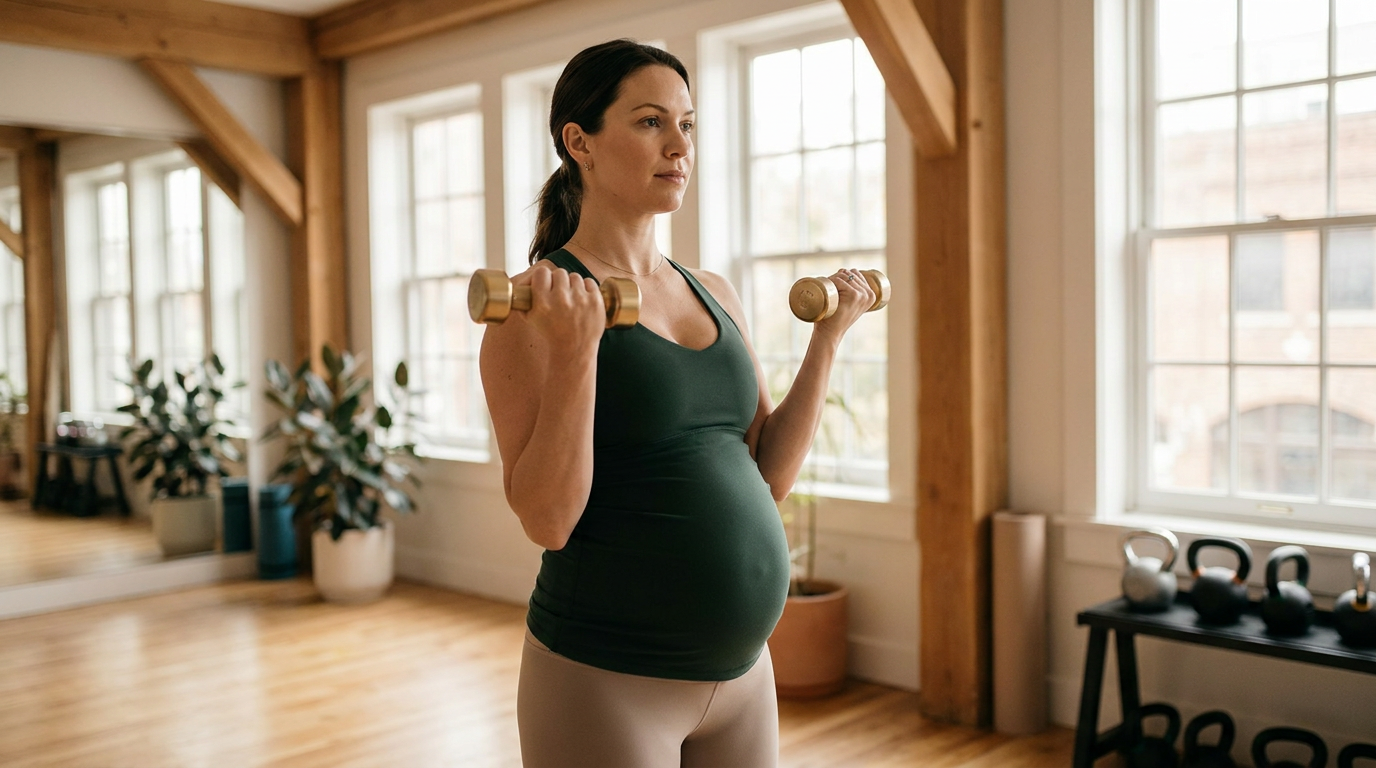
Strength training during pregnancy may do more than preserve muscle and make everyday movement easier. A randomized clinical trial involving 209 pregnant women found that a structured resistance program was associated with a lower rate of gestational diabetes, adding useful evidence to an area where exercise recommendations have often relied on broader or less specific data.
The result also fits a larger metabolic picture. Muscle helps clear glucose from the bloodstream, while maintaining strength can support mobility and joint function as body mass and movement patterns change. Still, one trial does not establish the ideal prenatal program for every woman, and exercise cannot eliminate a condition shaped by placental hormones, genetics, age, previous pregnancies and other clinical factors.
Strength training during pregnancy and glucose control
Gestational diabetes develops when insulin resistance rises beyond the pancreas’s ability to compensate. Some increase in insulin resistance is a normal feature of pregnancy, particularly later in gestation, because placental hormones help direct nutrients toward the fetus. The problem occurs when blood glucose becomes persistently elevated.
Skeletal muscle is central to glucose regulation. During and after resistance exercise, muscle cells can take up more glucose, partly through mechanisms that do not depend entirely on insulin. Repeated training can also improve insulin sensitivity and preserve metabolically active lean tissue. These effects make strength work a biologically plausible tool for reducing gestational diabetes risk.
In the reported trial, participants began the program at approximately 12 to 14 weeks of pregnancy and continued until week 36 or delivery. Those assigned to strength training developed gestational diabetes less often than the comparison group. Randomization strengthens the finding because it reduces some of the lifestyle and health differences that complicate observational research.
Important details still matter, including the absolute difference in diagnoses, adherence, participant characteristics and whether the results apply to women with different baseline risks or pregnancy complications. The study summary does not resolve those questions. Replication in larger and more diverse populations is needed before researchers can define the most effective training dose.
Why muscle matters beyond pregnancy
The value of resistance training is not limited to blood glucose. Strong leg and hip muscles support balance, gait and the ability to tolerate changing loads. This matters during pregnancy, but it also has implications for long-term joint health and independence.
Recent reporting on knee osteoarthritis similarly emphasizes exercise and stronger leg muscles as modifiable factors. Osteoarthritis is not simply the result of joints being “worn out.” Muscle weakness can increase the demands placed on the knee, while appropriately scaled exercise may improve function and reduce pain. Nutrition and modest weight reduction can also lower knee loading for people for whom weight loss is clinically appropriate.
Women have particular reasons to protect muscle across adulthood. Pregnancy may temporarily alter training capacity, and the menopause transition is associated with changes in body composition, bone turnover and fat distribution. Regular resistance exercise provides continuity across these stages. It supports strength and physical function without requiring maximal loads or high-impact sessions.
That does not mean more training is always better. Capacity can change substantially across trimesters and from one day to the next. Program quality depends on suitable loading, stable technique, recovery and adaptation to symptoms, not on pursuing personal records.
Safety depends on individual pregnancy factors
For many uncomplicated pregnancies, moderate exercise is considered appropriate, but prenatal strength training should be individualized. A clinician may recommend limits or avoidance when there are obstetric or medical complications, warning symptoms, or a history that changes exercise risk. Someone who trained before pregnancy may also need different guidance from someone beginning resistance exercise for the first time.
A sensible program generally prioritizes controlled repetitions, comfortable breathing and movements that can be performed without pain, dizziness or loss of balance. Loads and positions often need adjustment as pregnancy progresses. The growing abdomen, changes in joint laxity and shifts in the center of mass can make a previously comfortable exercise unsuitable even if overall fitness remains high.
Adequate recovery is equally relevant. A recent personal account linked intense exercise with shingles in a healthy woman in her 40s, but an individual case cannot prove that strenuous training caused viral reactivation. Shingles reflects reactivation of varicella-zoster virus, and risk is influenced by age and immune status. The more defensible lesson is that heavy training creates physiological stress and should be balanced with sleep, nutrition and recovery, particularly when illness symptoms or persistent fatigue appear.
During pregnancy, stopping exercise and seeking clinical assessment is appropriate for warning signs such as vaginal bleeding, fluid leakage, chest pain, faintness, regular painful contractions or unusual shortness of breath. These are medical signals rather than ordinary training discomfort.
Nutrition and iron remain part of the metabolic picture
Exercise studies can make prevention look like a training problem alone. It is not. Regular meals, sufficient energy intake, carbohydrate quality, protein and micronutrient status all influence how a pregnant woman feels and recovers. Nutrition should support pregnancy and activity rather than create an aggressive calorie deficit.
Iron deserves particular attention because deficiency disproportionately affects women and is common worldwide. Pregnancy increases iron requirements, while menstrual blood loss before pregnancy may mean that stores are already limited. Iron deficiency can contribute to fatigue, reduced exercise tolerance, breathlessness and impaired concentration, all of which can be mistaken for poor fitness or ordinary pregnancy tiredness.
A newly reported rapid iron test could eventually improve access to diagnosis in settings where laboratory infrastructure is limited. That innovation is promising, but availability and clinical validation will determine its practical value. Ferritin, hemoglobin and other markers require interpretation in context because inflammation and pregnancy-related changes can affect results. Supplementation is not automatically benign, so iron treatment is best based on assessment rather than symptoms alone.
Measuring training response over time
The new trial supports strength training as a potentially useful component of gestational diabetes prevention, not as a guarantee. Risk screening and standard prenatal care remain essential, including glucose testing when recommended. The most informative practical question is whether a program remains tolerable, progressive and compatible with stable energy, sleep and recovery.
Training recovery and energy become readable when they are logged consistently over weeks rather than judged from a single session. This is the kind of pattern Tulsy is built to surface.
Sources: Medical Xpress, ScienceDaily, The Guardian.
This content is for informational and educational purposes only. It is not intended to diagnose, treat, cure, or prevent any disease, and should not replace advice from a qualified healthcare professional.
Common questions
- Can lifting weights lower my risk of gestational diabetes?
- A randomized trial of 209 pregnant women found fewer cases of gestational diabetes among those following a strength program from early in the second trimester until late pregnancy or delivery. The finding is encouraging, but strength training cannot remove all risk. Placental hormones, genetics, age, health history and other factors also contribute.
- Is it safe to start resistance exercise while pregnant?
- Many women with uncomplicated pregnancies can perform appropriately scaled resistance exercise, including beginners. Clinical clearance is important when starting a new program or when medical or obstetric complications are present. Loads, positions and exercise selection may need to change across pregnancy, with technique, breathing, balance and symptom monitoring taking priority over intensity.
- Why am I unusually tired during prenatal workouts?
- Pregnancy itself raises cardiovascular and energy demands, but persistent or disproportionate fatigue can also reflect inadequate recovery, low energy intake, poor sleep or iron deficiency. Iron requirements rise during pregnancy, and low stores may reduce exercise tolerance. Symptoms alone cannot diagnose deficiency, so appropriate blood testing and clinical interpretation are more reliable than taking iron without assessment.
More on the research behind Tulsy in the science, or browse everything in Fitness and Nutrition.
References
- Strength training can prevent diabetes during pregnancy, study showsMedical Xpress
- Knee osteoarthritis isn’t inevitable — here’s what you can doScienceDaily
- At 43, I was fit and happy. Then I developed a nasty – and very expensive - case of shingles | Arwa MahdawiThe Guardian
- New rapid test could transform iron treatment worldwideMedical Xpress
Related reading
- Strength Training and Vitamin D for Women: Beyond the Scale
New research sharpens the case for looking beyond body weight when assessing resistance exercise, while raising practical questions about vitamin D2 and D3.
- Menopause and Biological Aging: What the Ovary Reveals
New evidence links reproductive timing with biological age and shows that ovaries continue changing after menopause. Neither finding proves that menopause accelerates aging.
- Strength Training for Longevity: What Women Need to Know
Physical capacity may begin declining in the mid-30s, but later-life improvement remains possible. For women, effective strength work also requires measured recovery.
Get Tulsy Daily in your inbox