Creatine for Women’s Longevity: Muscle, Metabolism and the Evidence Gaps
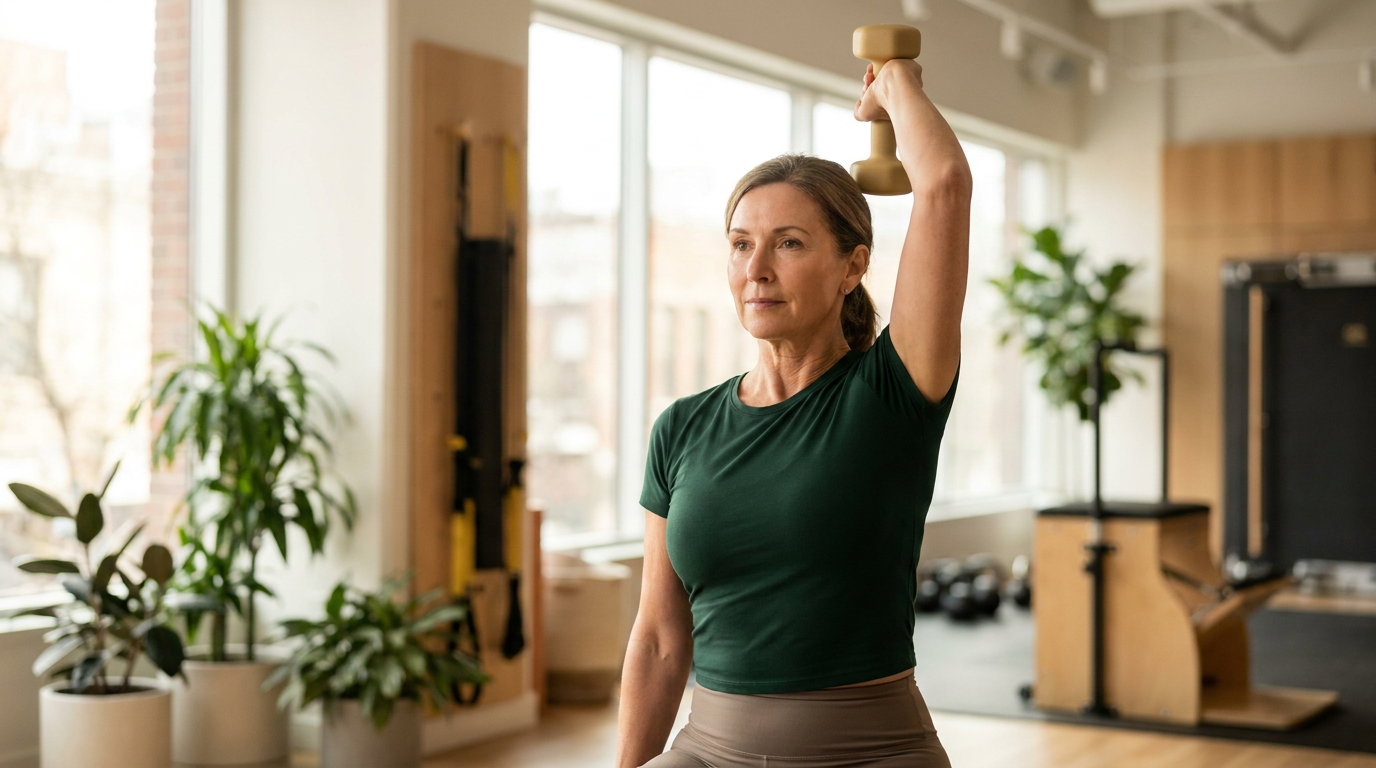
Creatine for women’s longevity is receiving attention for a practical reason: preserving muscle becomes more important with age, while maintaining it can become progressively harder. Muscle supports strength, mobility and metabolic health. Its value extends beyond appearance or performance.
A new 12-week study in middle-aged and older adults found that creatine supplementation was associated with gains in muscle and strength even without a structured exercise programme. Larger strength improvements, increased lean tissue and reduced fat were reported when creatine was combined with exercise and a calorie-reduced diet. At the same time, a 2026 paper on GLP-1 receptor agonists argues that women are likely to be the predominant users of these medicines while major sex-specific evidence gaps remain. Together, these reports sharpen an important longevity question: how can women protect functional tissue while body composition, hormones and treatment needs change?
Creatine for women’s longevity is promising, not settled
The creatine research by Chun J and colleagues was published in the Journal of the International Society of Sports Nutrition. It examined supplementation with and without an exercise and dietary intervention over 12 weeks. The supplied study information does not report the sample size, sex breakdown, randomisation procedure, creatine dose or menopausal status, so the strength and female specificity of its conclusions cannot be judged fully from the available material.
That limitation matters. A mixed group of middle-aged and older adults cannot automatically answer whether premenopausal, perimenopausal and postmenopausal women respond similarly. Twelve weeks can detect short-term changes in strength and body composition, but it cannot establish whether supplementation prevents disability, fractures or loss of independence over years.
Even so, the findings are relevant. Creatine helps replenish phosphocreatine, which supports rapid energy production in muscle. If the reported benefits are confirmed in well-designed female-specific trials, supplementation could become one component of preserving strength during ageing. It should not be interpreted as a replacement for resistance training. Exercise provides mechanical loading, coordination and bone-related benefits that a supplement alone cannot reproduce.
Menopause changes the context for muscle preservation
Midlife muscle health is not determined by one hormone, nutrient or training session. Menopause-related hormonal changes can coincide with shifts in body composition, sleep, recovery and fat distribution. Reduced activity because of pain, fatigue or disrupted sleep may add another pressure. Dieting without sufficient protein or resistance exercise can also reduce lean mass along with fat.
These factors make averages difficult to apply to an individual woman. A stable body weight can conceal a change in the ratio of lean tissue to fat, while weight loss does not reveal how much muscle has been retained. Strength, physical function, energy and recovery can therefore be more informative than the scale alone.
Symptoms may also affect consistency. Hot flushes, poor sleep, joint discomfort and changing cycle patterns can alter training tolerance from week to week. A guide to perimenopause tracking can help place changes in strength and recovery alongside sleep, cycle symptoms and energy rather than treating each signal as unrelated.
GLP-1 medicines bring lean mass into sharper focus
A 2026 paper by Meek CL and colleagues in The Lancet Obstetrics, Gynaecology, & Women’s Health examines global barriers involving access, safety and equity in GLP-1 receptor agonist treatment for women. The news summary describes it as part of a series and a call to action, rather than a new randomised trial. It therefore identifies gaps and priorities but does not prove that one muscle-preservation strategy works during GLP-1 treatment.
The paper is nevertheless relevant to longevity because these medicines are increasingly used for diabetes and weight management, and women are expected to account for most users. When weight falls, some lean tissue may be lost alongside fat. How much varies with factors such as starting body composition, rate of weight loss, diet and physical activity. The supplied material does not establish whether creatine prevents lean-mass loss in women taking GLP-1 medicines.
This is an area where assumptions should be avoided. Evidence that creatine improves strength or lean tissue in one middle-aged population cannot simply be transferred to women undergoing medication-assisted weight loss. Trials need to examine women directly, report menopausal stage, distinguish fat from lean-tissue change and include functional outcomes. Longer follow-up is also needed to determine whether any benefit persists.
Women using GLP-1 treatment may face additional considerations around appetite, gastrointestinal symptoms, hydration and adequate nutrient intake. A supplement cannot compensate for persistently insufficient protein or energy, nor does it resolve nausea or other treatment effects. Medication and supplement decisions require individual clinical context, particularly where kidney disease, pregnancy intentions or complex medical treatment are involved.
What a useful longevity signal looks like
The most informative outcome is not a single body-composition reading. Hydration can influence lean-mass estimates, and creatine itself may increase water held within muscle. A more credible picture combines repeated measures with practical outcomes such as resistance-training performance, capacity for daily tasks, recovery, energy and whether strength is stable over time.
This distinction also helps prevent normal fluctuations from being mistaken for treatment effects. A difficult training week may reflect poor sleep, a calorie deficit, cycle symptoms, illness or a change in medication rather than a failed supplement. Conversely, a higher scale weight after starting creatine does not necessarily indicate increased fat. Context and repeated observation are essential.
For women considering the longevity value of any intervention, the key questions are specific: Does strength improve? Is training recovery acceptable? Is energy stable? Are digestive effects manageable? Does the pattern hold beyond the first few days? Energy tracking over time can help separate a sustained shift from short-lived variation.
Strength, recovery, energy and digestive response only become readable when logged consistently over weeks. These are the kinds of connected patterns Tulsy is built to surface.
Sources: ScienceDaily, Medical Xpress.
This content is for informational and educational purposes only. It is not intended to diagnose, treat, cure, or prevent any disease, and should not replace advice from a qualified healthcare professional.
Common questions
- Does creatine help women maintain muscle after menopause?
- Creatine may support strength and lean tissue, especially when paired with resistance training, but the evidence specifically in postmenopausal women remains incomplete. A recent 12-week study included middle-aged and older adults, yet the supplied information did not report results by sex or menopausal stage. Longer female-specific trials are needed.
- Can I take creatine while using a GLP-1 medicine?
- There is not yet enough direct trial evidence to show that creatine preserves muscle in women using GLP-1 medicines. The combination requires individual consideration, particularly with kidney disease, low food intake, gastrointestinal symptoms or other medication. Resistance training and adequate protein remain important parts of protecting lean tissue during weight loss.
- Can creatine replace resistance training as I get older?
- No. Early evidence suggests creatine may improve some muscle and strength measures without a structured exercise programme, but it cannot reproduce all the benefits of resistance training. Exercise also challenges bone, balance, coordination and physical function. Creatine is better considered a possible support to training than a substitute for it.
More on the research behind Tulsy in the science, or browse everything in Longevity.
References
- Chun J et al. Effects of creatine supplementation with and without exercise and diet intervention on body composition, cognitive function, and markers of health in middle-aged and older adults. Journal of the International Society of Sports Nutrition. 2026. doi:10.1080/15502783.2026.2716273
- Meek CL et al. Global barriers to GLP-1 receptor agonist treatment in women: access, safety, and equity. The Lancet Obstetrics, Gynaecology, & Women's Health. 2026. doi:10.1016/s3050-5038(26)00228-1
Further reading (news coverage)
Related reading
- Strength Training for Longevity: What Women Need to Know
Physical capacity may begin declining in the mid-30s, but later-life improvement remains possible. For women, effective strength work also requires measured recovery.
- Women’s Longevity After Menopause: What to Track Earlier
Menopause may involve concentrated physiological change rather than a slow, uniform transition. Sleep and activity patterns can add useful context, but long-term trends matter more than single readings.
- Gut Health and Younger-Onset Cancer: What Women Should Know
Cancer rates are rising among younger adults for reasons established risk factors cannot fully explain. The gut microbiome is one hypothesis, not yet a proven cause.
Get Tulsy Daily in your inbox