Healthy Aging Habits Work Better as a System
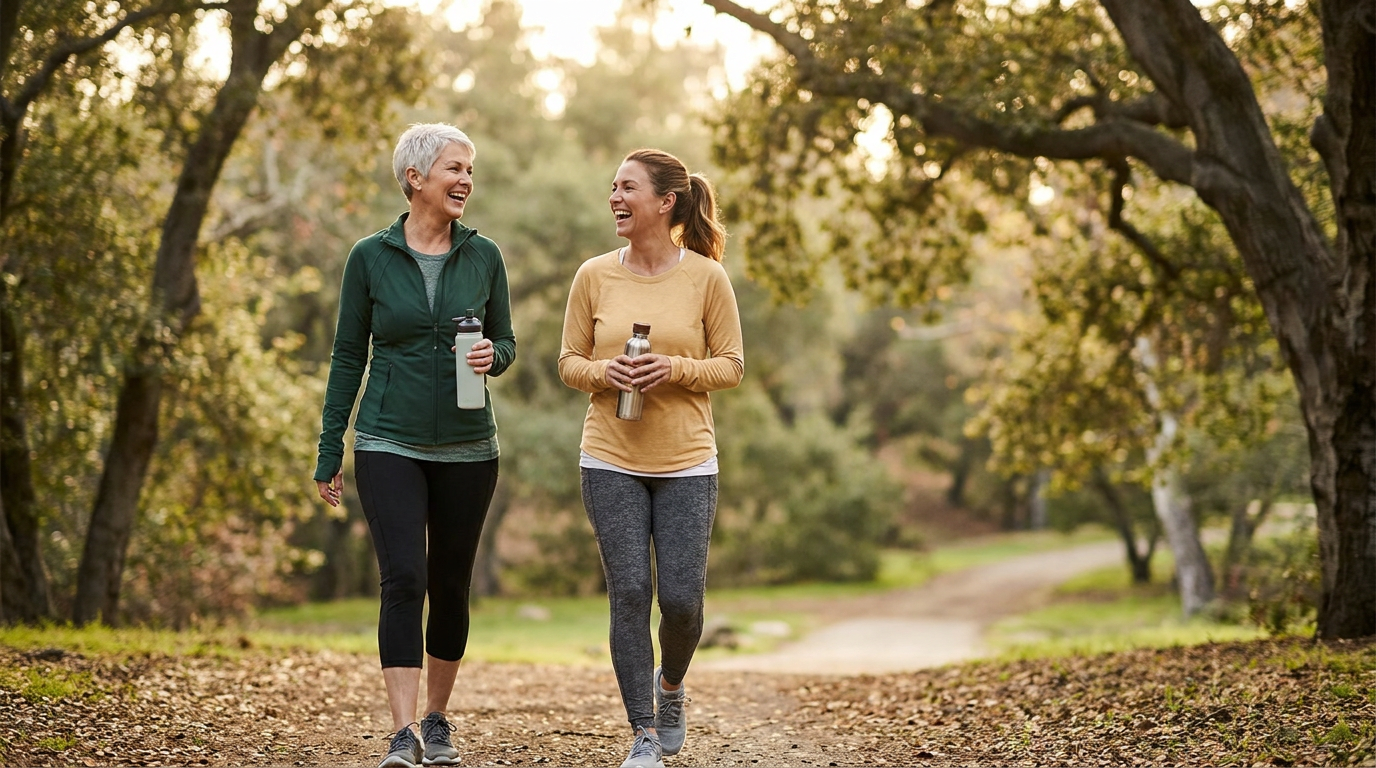
Healthy aging habits are often presented as separate decisions: exercise more, improve the diet, stay socially connected, keep the mind active. New evidence suggests that their combined effect may be more meaningful than any isolated change, particularly when a plan includes structure and regular support.
That finding matters for women, who make up a disproportionate share of people living with dementia. Longer average lifespan contributes to that imbalance, while cardiovascular health, metabolic disease and hormonal changes may also shape risk. The latest research does not identify one ideal routine for women, but it strengthens the case for treating cognitive longevity as a whole-body fitness and nutrition question.
Healthy aging habits appear to work together
A large trial of older adults at elevated risk of cognitive decline compared two versions of a multidomain lifestyle program. Both addressed physical activity, diet, cognitive stimulation and social engagement. The more structured program, which included regular coaching and organized sessions, produced greater improvement in overall cognition than a less intensive approach based largely on education and encouragement.
The result should be interpreted carefully. Improvement on cognitive tests is not the same as proof that dementia has been prevented, and the finding does not reveal which component contributed most. Exercise, nutrition, cognitive challenge, social contact and accountability may each matter, or their effects may reinforce one another.
That interaction is biologically plausible. Physical activity supports vascular function and insulin sensitivity. A nutrient-dense dietary pattern can help manage blood pressure, glucose and lipids. Cognitive and social activity may build resilience by repeatedly engaging attention, memory and executive function. A program that combines these elements also reduces the risk of placing too much faith in a single food, supplement or workout.
Exercise for brain health needs recovery as well as effort
For women, exercise planning across midlife and later life is not simply a question of accumulating more minutes. Aerobic activity supports cardiorespiratory fitness and cerebral blood flow, while resistance training helps preserve muscle, strength, glucose regulation and bone health. Balance and power work become increasingly relevant to fall prevention and physical independence.
The effective dose still depends on recovery. Perimenopause and menopause can coincide with sleep disruption, vasomotor symptoms, changes in body composition and longer perceived recovery after demanding sessions. These changes do not make exercise unsafe or ineffective. They do mean that a fixed schedule can obscure important differences between productive training and accumulating fatigue.
A well-rounded week will usually include both aerobic and resistance work, with intensity adjusted to current capacity. Progress is better judged through trends in performance, energy, sleep and soreness than through one difficult session. Consistency remains important, but consistency does not require identical effort every day.
The new lifestyle evidence also highlights adherence. Coaching and scheduled contact appeared to add value beyond general advice. That may reflect accountability, clearer progression, better problem-solving or simply a greater likelihood that healthy behaviors were sustained. The practical lesson is not that everyone needs a formal program. It is that specificity and feedback can be part of the intervention rather than optional extras.
Food patterns matter more than performance supplements
The nutrition component of cognitive aging is best understood as a dietary pattern, not a search for one brain-enhancing ingredient. Diets rich in vegetables, fruit, legumes, whole grains, nuts, fish and unsaturated fats are consistently associated with better cardiovascular and metabolic health. Those systems directly affect the brain through blood flow, inflammation and glucose regulation.
Protein remains important for maintaining muscle with age, especially when paired with resistance training. However, a need for adequate protein does not automatically justify concentrated amino-acid supplements. Recent research involving more than 270,000 people linked higher blood tyrosine with shorter lifespan in men, using both observational and genetic methods. The researchers did not find a significant lifespan effect in women.
This sex difference is notable, but it is not evidence that tyrosine supplements are beneficial or risk-free for women. Blood levels are shaped by diet, metabolism and other biological factors, and a biomarker association cannot be translated directly into a safe supplement dose. The study also concerned longevity rather than short-term focus, training performance or cognition.
Tyrosine occurs naturally in common protein-containing foods. The finding therefore should not prompt women to restrict nutritious foods such as dairy, fish, eggs, soy or legumes. It does, however, add to the reasons for treating high-dose, single-nutrient products differently from whole foods. Supplements marketed for mental performance often outrun evidence on long-term outcomes, interactions and female-specific effects.
Women need better life-stage evidence
Women’s dementia risk cannot be reduced to menopause, yet the menopausal transition may intersect with several modifiable factors. Sleep can deteriorate, blood pressure and lipids may shift, insulin sensitivity may change, and activity can become harder to sustain when symptoms are poorly controlled. These are relevant pathways even when direct evidence connecting a specific intervention to dementia prevention remains incomplete.
Most multidomain trials are not designed to determine whether programs work differently by menstrual status, menopause stage, symptom burden or hormone therapy use. That is a significant evidence gap. Women-specific recommendations still rely partly on broader aging research, cardiovascular evidence and established exercise physiology.
A sensible interpretation is to build around interventions with multiple benefits. Resistance training can support muscle, bone and metabolic health. Aerobic exercise can improve fitness and vascular risk. A minimally processed, plant-forward diet can support cardiometabolic markers without depending on speculative supplements. Cognitive and social engagement can be maintained alongside these physical foundations.
The heart, kidneys and brain also share important risk pathways. Recent clinical guidance has emphasized earlier detection of interconnected cardiovascular and kidney disease through routine blood and urine testing. Although screening is not a fitness intervention, blood pressure, glucose regulation and kidney function can affect exercise safety, recovery and long-term brain health. Lifestyle planning is strongest when it sits alongside appropriate preventive care rather than replacing it.
Track the pattern, not a perfect day
The most useful signals are often ordinary ones: whether training feels harder than expected, sleep worsens after high-intensity work, energy improves with regular meals, or recovery changes across the cycle or menopausal transition. These observations cannot establish cause on their own, but repeated patterns can help refine training load, meal timing and recovery practices.
Training recovery, sleep quality and energy only become readable when they are logged consistently over weeks. This is the kind of pattern Tulsy is built to surface.
Sources: ScienceDaily.
This content is for informational and educational purposes only. It is not intended to diagnose, treat, cure, or prevent any disease, and should not replace advice from a qualified healthcare professional.
Common questions
- What type of exercise is best for women’s brain health?
- No single exercise type has proved best. A combination of aerobic activity and resistance training is supported by evidence on cardiovascular fitness, glucose control, muscle preservation and cognition. Balance and power work also become valuable with age. The appropriate intensity depends on fitness, health conditions, symptoms and recovery capacity.
- Do women need tyrosine supplements for focus?
- Most women do not need supplemental tyrosine to meet nutritional requirements because it is available through protein-containing foods. Evidence that supplements improve focus is limited and context dependent, while long-term safety data are incomplete. A recent longevity association appeared in men, not women, but that does not establish safety or benefit for women.
- Can diet and exercise prevent dementia in women?
- Diet and exercise cannot guarantee dementia prevention, but they can improve several factors associated with lower risk, including cardiovascular fitness, blood pressure, glucose regulation and physical function. Trials suggest combined lifestyle programs may improve cognition in at-risk older adults. Longer follow-up is needed to determine how much they prevent dementia specifically in women.
More on the research behind Tulsy in the science, or browse everything in Fitness and Nutrition.
References
Related reading
- Menopause Weight Gain: What Hormones Change and What May Help
Menopause can alter fat distribution, bone turnover and recovery. New research is exploring shared biological targets, but established care remains the practical starting point.
- Endometriosis Gut Symptoms: What Pain Patterns Can Reveal
Bloating, bowel pain and nausea may accompany endometriosis, but no digestive symptom can diagnose it. Timing across the cycle can make the pattern clearer.
- Postpartum Hormone Changes and Psychosis Risk
Postpartum psychosis is rare but medically urgent. Hormone withdrawal, severe sleep disruption and individual vulnerability may combine to raise risk.
Get Tulsy Daily in your inbox